Labiaplasty and Hood Reduction for a College Student
A 19-year-old college student had a labiaplasty and clitoral hood reduction to address asymmetry and upper fullness — done under local anesthesia, with her phone in hand for the entire procedure.
Case Story
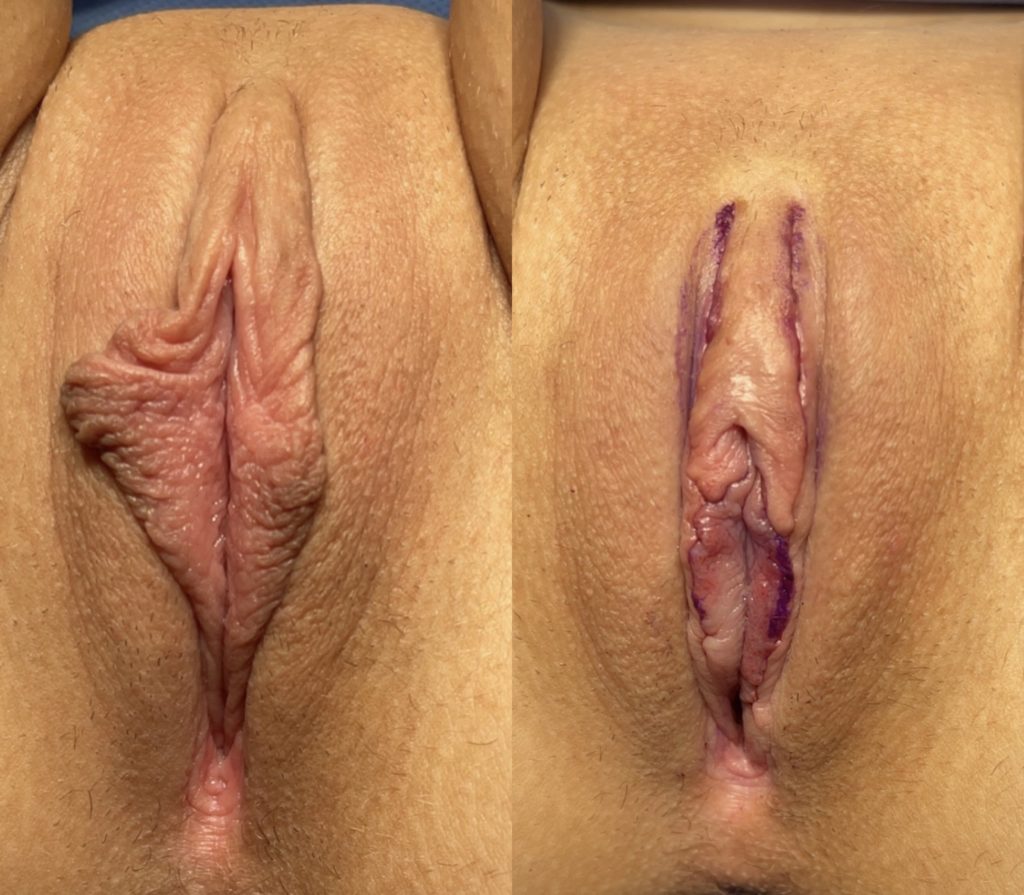
It was an honor to perform a labiaplasty and hood reduction on a 19-year-old college student today. She was primarily bothered by the asymmetry of her right and left labia and by the puffiness of her clitoral hood. The excess hood tissue created fullness in the upper part of the vulva that she found distressing, and after consulting with me she felt confident about proceeding with a labiaplasty and hood reduction.
Like most of my patients, she had the procedure done under local anesthesia — completely awake throughout. She was relaxed enough during the surgery that she chatted with us and texted her friends from the table. IV sedation is always an option for more anxious patients, but she needed none of it.
Her result speaks for itself: a more symmetrical labia minora, a refined and less puffy clitoral hood, and a naturally balanced outcome. I know she will be extremely happy once she is fully healed.
Immediate post-procedure result
Procedure Highlights
Labia minora reduction for improved symmetry
Clitoral hood reduction to address upper fullness
Performed under local anesthesia — patient fully awake
Balanced, natural-looking outcome
Correction of right-left labia asymmetry
IV sedation available but not required
Surgical Philosophy and Teaching Points
Asymmetry Is Normal — and Very Correctable
No two sides of the labia are perfectly identical, and many patients are bothered by visible differences in size or shape between the right and left labia. Correcting asymmetry requires careful tissue assessment and precise removal from the fuller side — the goal is balance that looks naturally proportional, not mathematically identical.
Hood Reduction Addresses "Puffiness" at the Top
When the clitoral hood has excess tissue, it creates a full, rounded appearance in the upper portion of the vulva that can persist even after labia minora reduction. Reducing the hood alongside the labia minora produces a balanced result — one that looks proportional from both the front and the standing view.
Most Patients Are Comfortably Awake Under Local Anesthesia
Roughly 95% of labiaplasty procedures are performed under local anesthesia, with patients fully alert. The injections themselves are the most uncomfortable part — once the local takes effect, most patients feel only mild sensation. Many are relaxed enough to use their phones, chat, or listen to music throughout the procedure.
Frequently Asked Questions
Can I have a labiaplasty at 19 years old?
Yes. Labiaplasty can be performed on adults of any age, including younger women who are bothered by labia asymmetry, excess tissue, or discomfort. Many young women seek this procedure after completing puberty.
Will I be awake during my labiaplasty?
Most patients are awake under local anesthesia. Once the numbing takes effect, discomfort is minimal. IV sedation is available for patients who prefer a deeper level of comfort during the procedure.
Why does the clitoral hood look puffy after labiaplasty if the hood wasn't treated?
Without a hood reduction, the hood can appear disproportionately prominent after the labia minora have been reduced. This is why Dr. Oppenheimer performs hood reduction alongside most labiaplasty procedures — it ensures the result looks balanced.
How do I know if my labia asymmetry needs to be corrected?
If the asymmetry is causing you discomfort, self-consciousness, or irritation, it may be worth addressing. A consultation with Dr. Oppenheimer will help determine whether the asymmetry is within normal variation or whether correction would be beneficial.
How long does labiaplasty take?
The procedure typically takes 60 to 90 minutes depending on the extent of tissue involved. Patients are usually ready to go home within an hour or two of arriving.