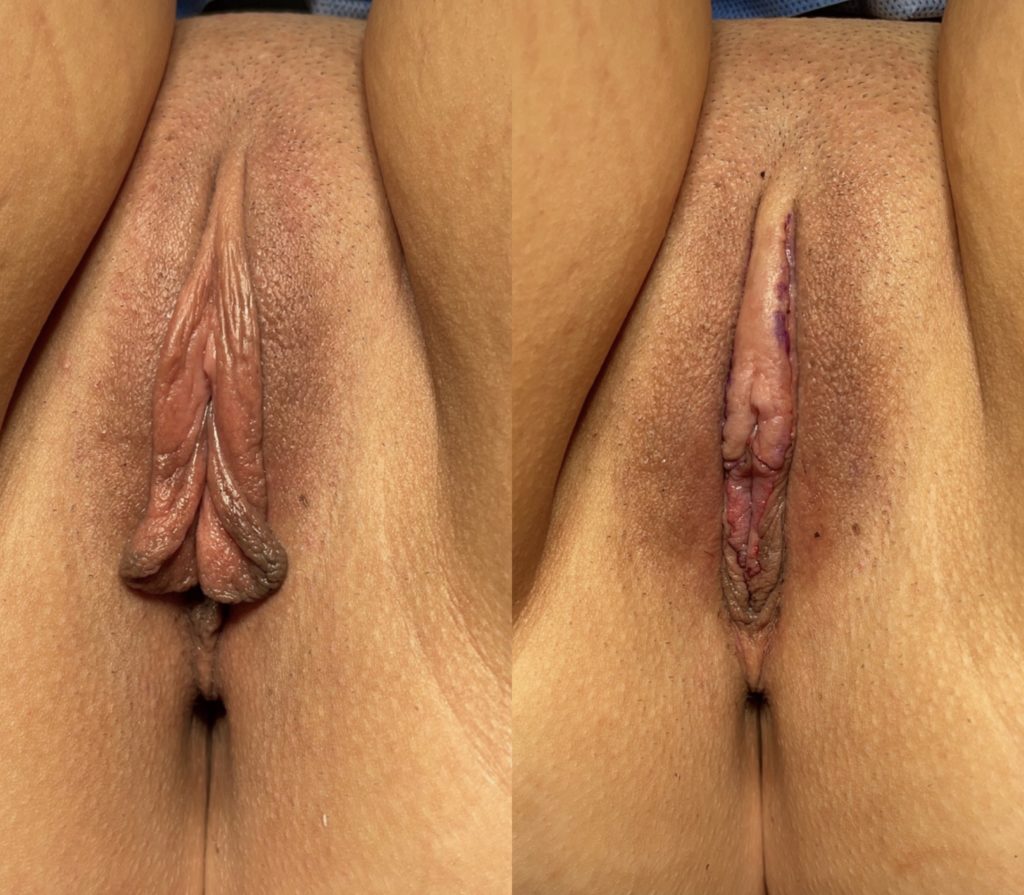
A 24-year-old patient had been bothered by her labia since puberty — experiencing irritation during exercise and intercourse. Her more prominent clitoral hood required an aggressive hood reduction alongside her labiaplasty.
Case Story
Today’s patient is 24 years old. Her main concerns were discomfort: her labia minora had been irritating during exercise and intercourse since puberty. She was excited to finally have this chapter behind her.
As always, I started the procedure with a hood reduction. In her case, the clitoral hood was more prominent than average, so the hood reduction was more extensive than in a typical case. Many patients are understandably nervous about hood reduction, concerned about the proximity to the clitoris — but the skin we remove is superficial and quite remote from the clitoral body itself. The clitoris is well-protected inside the hood tissue throughout the procedure.
After the hood reduction, I performed the labiaplasty. She did very well throughout the procedure and was happy to finally close this chapter of her life. Labiaplasty is liberating — and for patients who have been bothered since their teens, that liberation often feels especially significant.
Before and after labiaplasty results
Procedure Highlights
Labia minora reduction for functional and aesthetic improvement
More aggressive clitoral hood reduction for prominent hood
Relieved irritation during exercise and intercourse
Performed awake under local anesthesia
Bothered since puberty — long-awaited resolution
Clitoral body fully protected throughout hood reduction
Surgical Philosophy and Teaching Points
Labial Irritation Since Puberty Is Common and Treatable
Many young women have been aware of their labia since they first developed in puberty. The discomfort — whether during exercise, wearing certain clothes, or during intimacy — accumulates over years. Labiaplasty does not just change the appearance; it removes a persistent physical source of friction and irritation that has been present for much of the patient’s adolescent and adult life.
A More Prominent Hood Requires a More Thorough Reduction
The degree of hood reduction varies by patient. In cases where the clitoral hood is more prominent, a more extensive reduction is needed to achieve balance with the reduced labia minora. Under-treating the hood leaves the upper vulva looking disproportionate — so the surgical plan adapts to what the anatomy actually requires.
Hood Reduction Does Not Affect Clitoral Sensation
The skin of the clitoral hood is removed superficially — well above the level of the clitoral body, which sits safely within the hood tissue. Patients frequently express concern about this, and reassurance is always warranted: the nerve supply to the clitoris is preserved by staying superficial and remote from the underlying erectile tissue.
Frequently Asked Questions
Can labiaplasty relieve irritation from excess labia since puberty?
Yes. Labial irritation during exercise, clothing, and intercourse is one of the most common reasons young women seek labiaplasty. Reducing the excess tissue eliminates the source of friction permanently.
Is it normal to have been bothered by my labia since I was a teenager?
Yes. Many women become aware of their labia during puberty when the tissue develops. Some are bothered from early on by size, asymmetry, or the sensation of friction. This is a common experience and a legitimate reason to consider labiaplasty once you are an adult.
Will a hood reduction affect my sensitivity?
No. The tissue removed during a hood reduction is the superficial skin of the hood — well above the clitoris itself. Sensitivity is preserved because the procedure does not interact with the clitoral body or its nerve supply.
What if my clitoral hood is more prominent than average?
A more prominent hood simply requires a more thorough hood reduction to achieve proportional results. Dr. Oppenheimer adapts the extent of the reduction to each patient's anatomy — there is no one-size-fits-all approach.
How soon after labiaplasty can I exercise again?
Most patients return to light activity within a few days and resume the gym at the three-week mark. Activities that put direct pressure on the surgical area (cycling, for example) may need additional time.