Edge Technique Labiaplasty: Case Study and Surgical Philosophy
A 51-year-old patient shares Dr. Oppenheimer's conviction that this procedure is long overdue. Her case — narrow labia with longer length — illustrates why the edge technique consistently produces cleaner, more natural results than the wedge.
Case Story
Today’s patient is 51 years old, and even before we started she told me she wished she had done this years ago. I hear that often — and it never gets old. I am grateful for every patient who places their trust in me for this procedure.
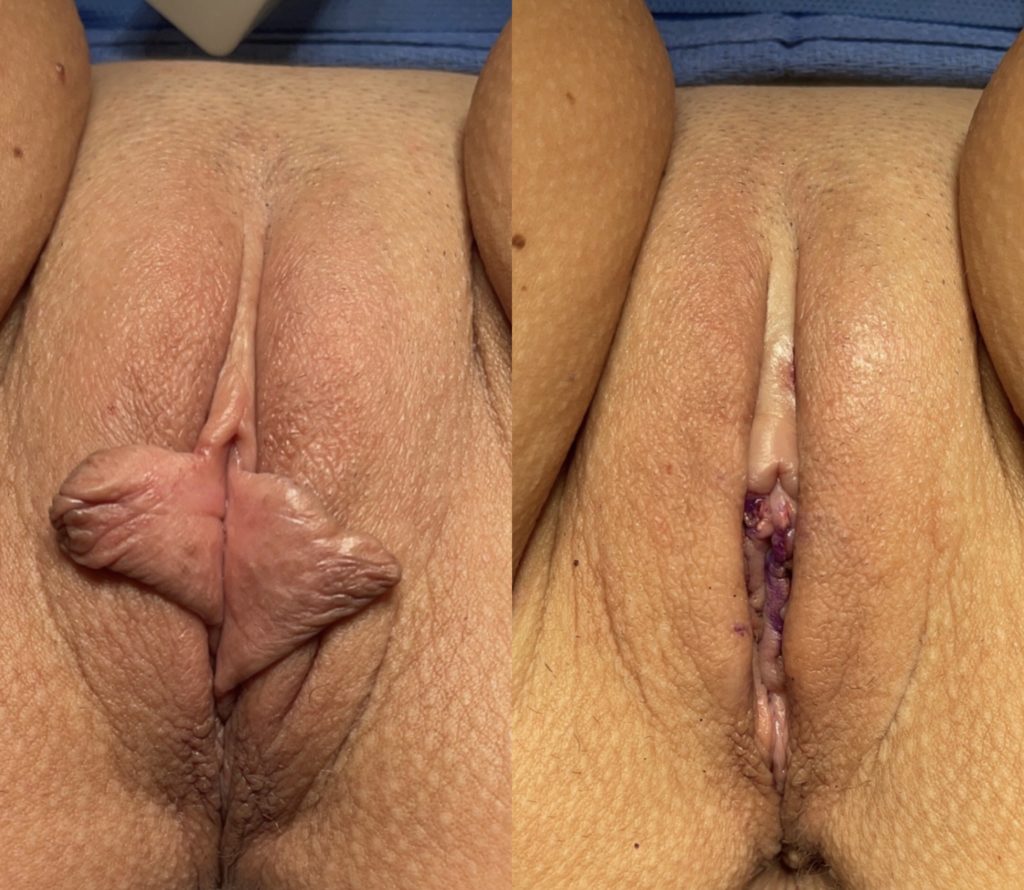
In my opinion, the edge technique labiaplasty is far superior to the wedge technique. The edge technique produces a smooth border that does not separate, gap, or notch during healing — all of which the wedge can be prone to. Her procedure today was a clear demonstration of this: a small hood reduction followed by a labia minora reduction with excellent symmetry and clean edges.
Her anatomy was particularly suited to this approach: her labia had a narrow width but longer length. When labia are primarily elongated rather than wide, the edge technique moves cleanly from top to bottom without needing to extend down to the perineum. Her surgery went very well, and I am confident she will heal beautifully.
Immediate post-procedure result
Procedure Highlights
Edge technique labiaplasty
Clitoral hood reduction
Narrow-width, longer-length anatomy — suited to edge technique
Smooth, non-notching labial border achieved
Excellent right-left symmetry
Performed awake under local anesthesia
Surgical Philosophy and Teaching Points
Edge vs. Wedge: Why the Edge Technique Wins
The wedge technique removes a V-shaped segment from the middle of the labia minora and stitches the two remaining pieces together. While it preserves the natural edge of the labia, it creates a midline seam that can gap, notch, or separate during healing. The edge technique, by contrast, trims the entire outer border in a single smooth line — leaving an edge that heals cleanly and naturally without a midline junction.
Narrow-Width Anatomy Simplifies the Procedure
When the labia minora are primarily long rather than wide, the edge technique can address the full length without extending to the perineum. This simplifies the procedure, keeps the incision contained, and often results in faster healing. Anatomy influences surgical planning — no two procedures are identical.
It Is Never Too Late
Patients who have delayed labiaplasty for years or decades often describe an immediate sense of relief once they decide to move forward. The sentiment “I should have done this years ago” is one of the most common things Dr. Oppenheimer hears in follow-up. The right time is whenever the patient is ready.
Frequently Asked Questions
What is the edge technique labiaplasty?
The edge technique removes excess tissue along the full outer border of the labia minora, from top to bottom, in a single smooth excision. It leaves a clean, naturally tapered edge that heals with minimal visible scarring.
Why is the edge technique better than the wedge technique?
The wedge creates a midline seam in the labia that can gap, notch, or separate during healing. The edge technique avoids this by trimming along the natural border rather than cutting across it — resulting in a smoother, more predictable outcome.
Does labia width affect how labiaplasty is performed?
Yes. When the labia are narrow but long, the edge technique can address the full length cleanly without extending down to the perineum. Wider labia may require tissue removal across a broader area. Each case is planned based on the individual anatomy.
Can I have labiaplasty in my 50s?
Yes. Labiaplasty is performed safely across all adult age groups. Healing may take slightly longer with age, but outcomes are excellent, and many older patients say the procedure exceeded their expectations.
Will the labia minora edge look natural after labiaplasty?
Yes. The edge technique preserves the natural contour and taper of the labia minora while removing excess tissue. The result looks naturally proportional rather than surgically altered.