Postpartum Labiaplasty and Hood Reduction in Orlando
A 31-year-old mother of two came to Dr. Oppenheimer for a labiaplasty after a previous procedure by her gynecologist removed too little tissue. Her edge technique revision produced a balanced, natural result.
Case Story
Today’s patient is a 31-year-old mom of two who traveled from just outside Orlando for her labiaplasty. Her primary concern was self-consciousness — particularly during intimacy, where she felt her labia were uncomfortable, distracting, and made her feel insecure. She had been very excited to move forward with today’s procedure.
She had a prior labiaplasty performed by her gynecologist, during which only a very small amount of tissue was removed. Fortunately, the previous procedure left minimal scarring and no injuries — making revision straightforward. She presented today with her original concerns largely unaddressed.
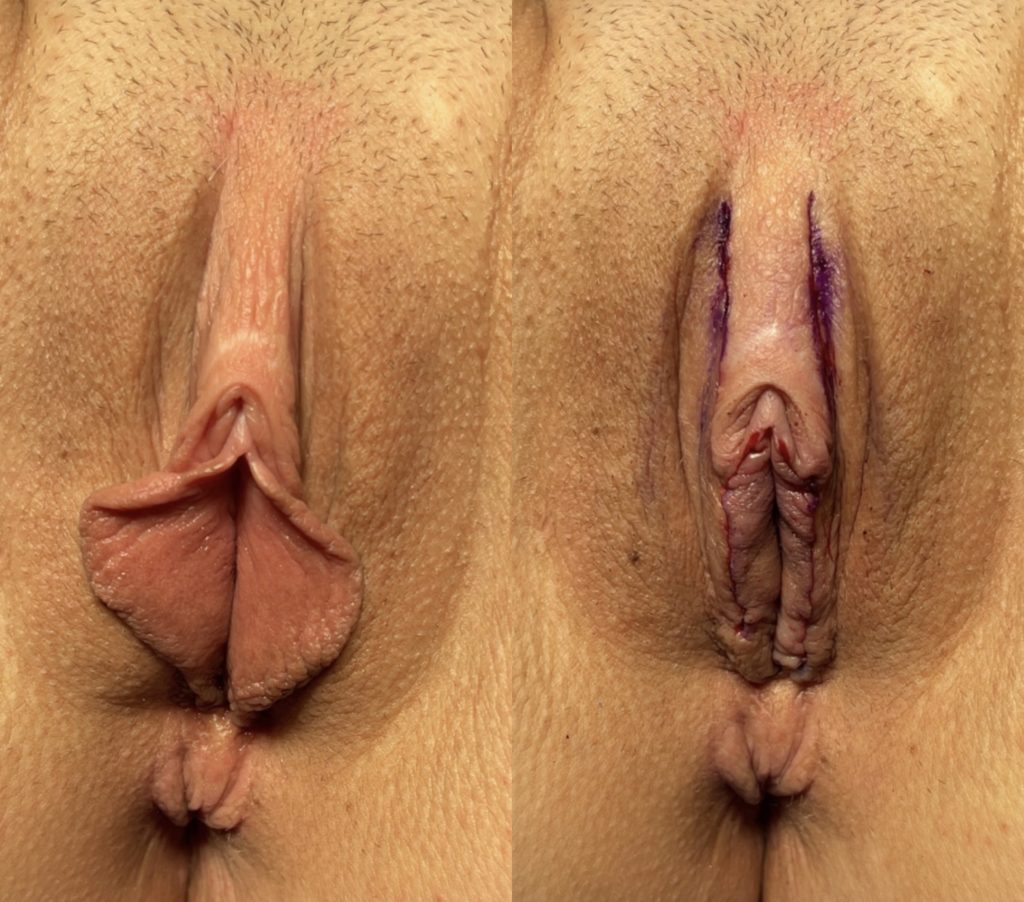
We proceeded with our standard edge technique labiaplasty and hood reduction. She was awake for the procedure and tolerated the local anesthesia well. As you can see from her results, she has a very balanced outcome — less hood puffiness and smaller, more symmetrical labia minora. I am confident she will feel the relief and confidence she has been hoping for.
Post-procedure result with edge technique
Procedure Highlights
Revision labiaplasty following a prior incomplete procedure
Edge technique labiaplasty for smooth, natural edges
Clitoral hood reduction for balanced upper vulval appearance
Performed awake under local anesthesia
Minimal scarring from prior procedure — no complicating factors
Revision labiaplasty is more common than many patients realize. A prior procedure that removed too little tissue, left asymmetry, or caused visible scarring can often be corrected — especially when the original healing was clean. This patient’s case is a good example: minimal scar tissue from the first procedure made revision straightforward and her result excellent.
The Edge Technique Produces a Smooth, Natural Contour
The edge technique removes tissue along the natural edge of the labia minora, preserving the smooth, tapered profile of the tissue. Unlike the wedge technique, it does not create a seam in the middle of the labia that can gap, notch, or separate during healing — making it Dr. Oppenheimer’s preferred approach.
Hood Reduction Prevents Imbalance
When a labiaplasty is performed without addressing the clitoral hood, the hood can look disproportionately full relative to the reduced labia. Performing a hood reduction at the same time ensures that the entire upper and lower vulval area heals with a consistent, proportional appearance.
Frequently Asked Questions
Can I have a labiaplasty if I've had one before?
Yes. Revision labiaplasty is possible and often straightforward when the prior healing was clean. Dr. Oppenheimer evaluates the existing tissue, existing scars, and remaining anatomy to plan the safest and most effective revision approach.
Is labiaplasty safe after having children?
Yes. Postpartum labiaplasty is very common. Many women choose to address both aesthetic and functional concerns after childbirth, often combining the procedure with a perineoplasty if perineal tissue is also involved.
What is the edge technique labiaplasty?
The edge technique trims the outer edge of the labia minora to reduce its size while preserving the natural tissue profile. It results in a smooth, clean border without a visible midline seam — which is why it tends to heal with less visible evidence of surgery than the wedge technique.
Why do some labiaplasties not remove enough tissue?
Conservative removal is common among surgeons who are less experienced with the procedure or who prioritize caution over outcome. While this is understandable, it can leave patients with unresolved concerns — and revision is often a good option in those cases.
Will self-consciousness about my labia go away after labiaplasty?
For most patients, yes. Women who are bothered during intimacy, in clothing, or during exercise often report a significant improvement in confidence after the procedure — not just physically, but emotionally as well.