Labiaplasty Procedure with Hood Reduction for Clitoromegaly
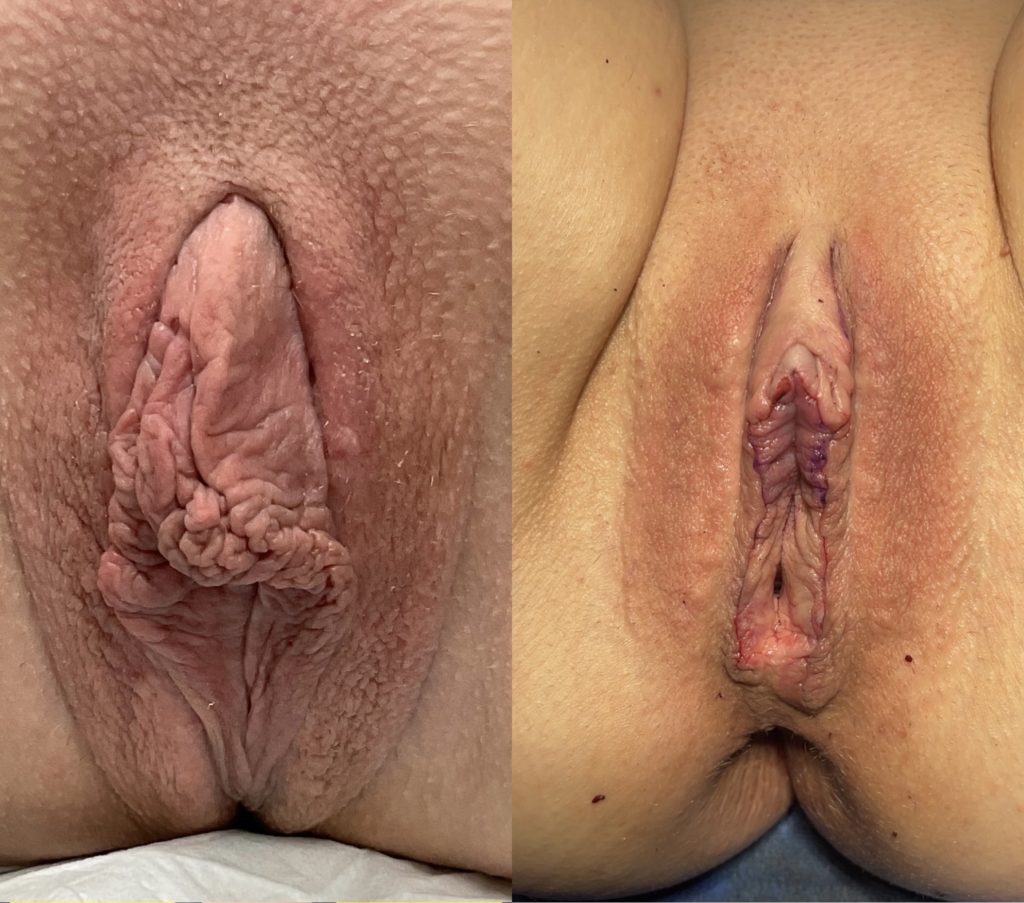
This case features a labiaplasty with clitoral hood reduction for a 57-year-old patient who had been bothered by enlarged labia and had experienced clitoral enlargement related to hormone replacement therapy.
Case Story
Today’s labiaplasty patient is 57 years young and has always been bothered by her enlarged labia. She is currently on hormone replacement therapy and has experienced some enlargement of the clitoris, a condition known as clitoromegaly.
Because of this, we needed to be thoughtful and conservative with her clitoral hood reduction. The goal was to maintain the proper balance between the clitoris, the hood, and the labia while avoiding overexposure of the clitoris.
Clitoral enlargement can occur with hormone use, and maintaining the proper proportions is especially important when performing a labiaplasty and hood reduction. I think she is going to be very happy with her results as she heals from this dramatic transformation.
Procedure Highlights
Labia minora reduction
Clitoral hood reduction
Customized markings based on natural asymmetry
Conservative tissue removal due to clitoromegaly
Preservation of clitoral coverage
Additional contouring toward the lower portion of the labia
Balanced final appearance
Surgical Philosophy and Teaching Points
Every Patient Has Natural Asymmetry
The left and right labia are rarely identical. Small differences in size and shape are completely normal, and surgical markings are customized for each patient rather than forcing both sides to be exactly the same.
Clitoromegaly Requires a Conservative Approach
One of the important concepts discussed in this case is that clitoromegaly changes how aggressive we can be with a hood reduction and labiaplasty.
Although the clitoris itself cannot be reduced, the surrounding tissues must remain proportional. Removing too much tissue can leave the clitoris overexposed and create an unnatural appearance. Maintaining appropriate coverage is essential for both aesthetics and comfort.
Balance Is More Important Than Maximum Reduction
As we completed this case, we were able to perform more reduction toward the lower portion of the labia while maintaining the proper amount of coverage over the clitoris at the top.
Everything has to match. A successful result is not determined by removing the maximum amount of tissue. It is determined by creating harmony and preserving natural proportions.
Surgical Video
This video demonstrates the markings for labia minora reduction and discusses how clitoromegaly influences surgical planning. Dr. Oppenheimer explains why preserving appropriate clitoral coverage is important and how balance is maintained throughout the procedure.
Edited Transcript
These are our markings for the labia minora reduction. There is always some difference between the left and right labia, which is completely normal.
The hood reductions have already been performed, and because this patient has mild clitoromegaly, we cannot be too aggressive with tissue removal. The clitoris itself cannot be reduced, so maintaining the proper amount of coverage is important.
As we finish the procedure, you can see that everything remains balanced. We were able to perform additional reduction toward the bottom while preserving the right amount of tissue over the clitoris at the top.
I think she is going to be very happy with the results, and everything looks great as we begin the healing process.
Frequently Asked Questions
What is clitoromegaly?
Clitoromegaly refers to enlargement of the clitoris. It may occur naturally or can develop in association with hormone therapy.
Can hormone replacement therapy affect the clitoris?
Yes. Hormone therapy can sometimes lead to enlargement of the clitoris, which may influence surgical planning during a labiaplasty or hood reduction.
Can the clitoris itself be reduced?
No. In this case, the clitoris was not reduced. Instead, the surrounding tissues were carefully balanced to maintain proper coverage and natural proportions.
Why can't hood reductions always be aggressive?
Removing too much tissue can leave the clitoris overly exposed. The goal is to preserve comfort, function, and natural appearance.
Are the two sides always symmetrical?
No. Mild asymmetry between the left and right labia is completely normal, and surgery is customized to each patient's anatomy.