Labiaplasty with Clitoral Hood Reduction for an Active Cyclist
This case features a 25-year-old avid cyclist whose enlarged labia minora caused pinching, pulling, and constant discomfort while riding. She underwent a labiaplasty and clitoral hood reduction under IV sedation, with a focus on hidden scar placement for a clean, natural result.
Case Story
Today’s labiaplasty patient is 25 years old and is an avid cyclist. She has primarily been bothered by functional issues when riding her bike — pinching and pulling of the labia minora, and having to stop and adjust herself frequently. This is a nuisance that has affected her enjoyment of something she loves, so she was very excited to proceed with surgery.
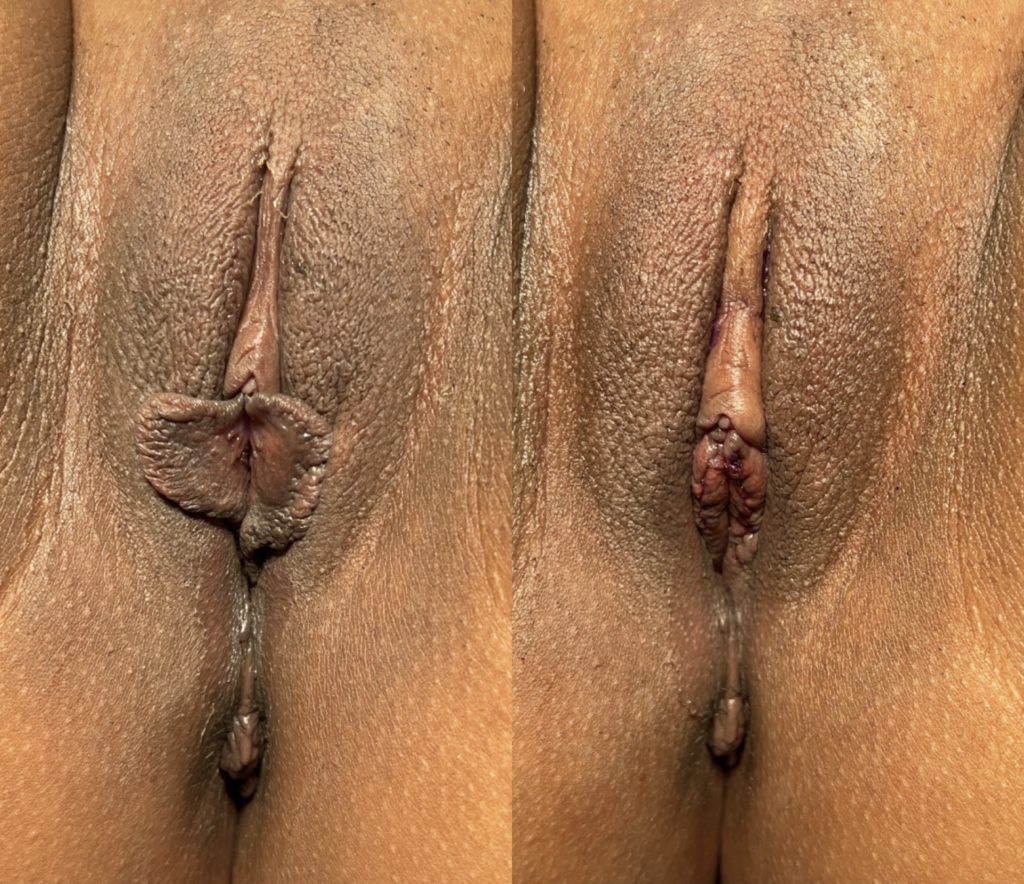
In her case she had very little extra tissue in the clitoral hood area, so we removed only a small portion from each side. She also had a lot of fullness at the very top, so we reduced the hood along the sides while making sure the clitoris remained protected inside the hood tissue. The incision was placed in the sulcus — the natural crease between the labia majora and labia minora — keeping any scarring hidden.
Overall her surgery went great. Labiaplasty in general heals remarkably well and quickly, especially with this hidden scar placement technique. I am very excited for her to see her results and get back on the bicycle after her recovery.
Immediate post-op results
Procedure Highlights
Labia minora reduction
Clitoral hood reduction
Performed under IV sedation
Hood reduced along the sides to address fullness at the top
Clitoris left protected inside hood tissue
Incision placed in the sulcus (natural crease) for hidden scarring
Functional relief from pinching and pulling during physical activity
Surgical Philosophy and Teaching Points
Protecting the Clitoris During Hood Reduction
A critical principle in clitoral hood reduction is ensuring the clitoris remains adequately covered after tissue is removed. In this case, the patient had fullness at the very top of the hood, and tissue was reduced along the sides. The result is a flatter, more refined appearance while the clitoris stays protected inside the remaining hood tissue — preserving both comfort and sensitivity.
For the labia minora reduction in this case, the incision was placed in the sulcus — the natural crease between the labia majora and labia minora. This technique conceals the scar within an existing fold of tissue, making it virtually invisible after healing. Labiaplasty heals exceptionally well, and with this approach there is very little visible evidence of surgery.
Labiaplasty Addresses Both Function and Comfort
Many patients seek labiaplasty not only for cosmetic reasons but because enlarged labia interfere with daily activities. For cyclists, runners, and other active women, pinching and pulling during exercise can be a persistent and frustrating issue. Surgery in these cases provides meaningful functional relief in addition to aesthetic improvement.
Surgical Video
This video shows a detailed approach to the labiaplasty and clitoral hood markings, the incision technique along the sulcus for hidden scar placement, and the final result. Dr. Oppenheimer walks through the unique anatomy of this patient and explains the decisions made during the hood reduction.
Edited Transcript
All right, all done with this labiaplasty and hood reduction. You can see she had a lot of fullness at the very top, so we reduced the hood along the sides. You can see the clitoris is protected inside of that hood tissue. Overall, she did great.
This was done under IV sedation for her — labiaplasty and hood reduction.
Frequently Asked Questions
What procedures were performed in this case?
This patient had a labiaplasty (labia minora reduction) and a clitoral hood reduction. The hood was reduced along the sides to address fullness at the top, while the clitoris was left protected inside the remaining hood tissue.
What type of anesthesia was used?
This procedure was performed under IV sedation.
Can labiaplasty help with discomfort during exercise or cycling?
Yes. Enlarged labia minora can cause pinching, pulling, and irritation during physical activity. Labiaplasty removes the excess tissue that creates this friction, providing meaningful functional relief alongside the cosmetic improvement.
Where is the incision placed and will there be visible scarring?
The incision was placed in the sulcus — the natural crease between the labia majora and labia minora. This keeps any scarring hidden within an existing fold of tissue. Labiaplasty heals remarkably well, and with this technique there is very little visible evidence of surgery.
How much hood tissue is removed?
The amount removed is determined entirely by the patient's individual anatomy. In this case, the patient had very little extra tissue in the hood area overall, so only a small portion was removed from each side — just enough to address the fullness at the top while maintaining adequate coverage of the clitoris.
When can I return to cycling or other physical activity after labiaplasty?
Most patients are advised to wait approximately six weeks before returning to activities like cycling, running, or anything involving direct pressure or friction in the surgical area.